HOGAN Assessments: Better Talent Decisions & Leadership
Hogan Assessments reveal how people work – in everyday situations (HPI), under pressure (HDS), and based on their core values and motives (MVPI). This enables predictive and fair decisions in recruiting and talent development: fewer hiring mistakes, fewer leadership risks, and more stable teams. Hogan is used worldwide, available in more than 50 languages, and links personality data with real performance indicators — continuously supported by new validation studies.
Author:
Mavie editorial team

What Are Hogan Assessments?
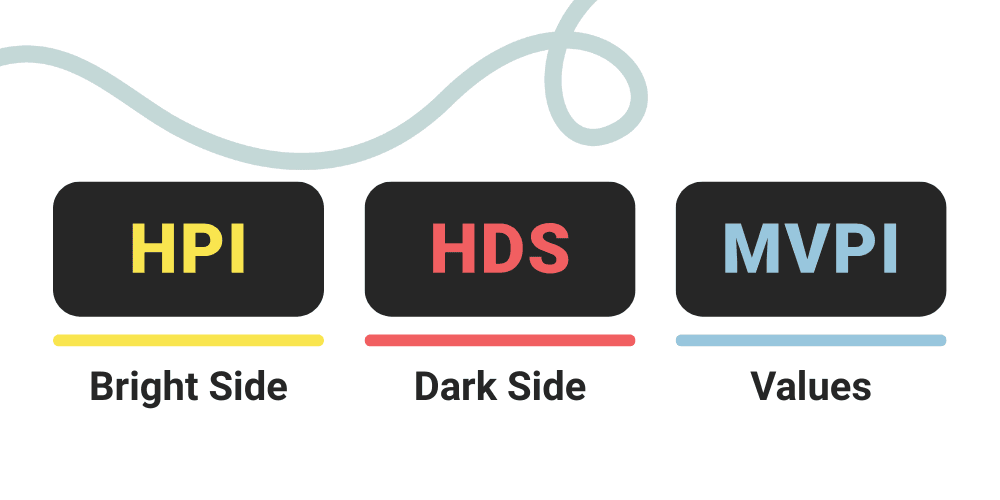
Hogan evaluates personality from three angles and connects these insights with real job performance data. The result is a strong decision-making foundation for recruiting, leadership, and team development.
• HPI (Bright Side): Everyday behavior, strengths, work style
• HDS (Dark Side): Overused strengths and potential derailers under pressure
• MVPI (Values): Motives and values that guide decisions and leadership behavior
Job performance depends on many factors. Traditional performance reviews are often subjective because they strongly reflect the evaluator’s perspective. Personality, however, remains relatively stable over time and can be measured reliably. Studies show a clear predictive link between personality traits and later job performance. Combining personality profiles with role-specific KPIs further increases predictive validity — an approach Hogan has used systematically for decades.
How Are Hogan Assessments Used?
1. Recruiting & Selection
Make better hiring decisions without bias:
Personality data combined with role-specific KPIs provide objective fit scores instead of relying on intuition. Structured interview guides and comparison tools help hiring teams make faster, more transparent decisions.
Reliable worldwide:
Hogan is globally normed and based on an international dataset of more than 200,000 people. With availability in over 50 languages, it supports consistent processes and comparable decisions across countries.
2. Leadership Development
Leverage strengths, reduce risks:
Leaders gain insight into how their behavior is perceived day-to-day and which patterns may become problematic under pressure.
• HDS highlights common derailers (e.g., withdrawal, impulsivity, control tendencies)
• MVPI reveals the values and drivers that shape a leader’s decision-making
3. High-Potential Development & Succession Planning
Identify hidden talent:
Hogan supports early identification of high-potentials and provides an objective basis for career paths and succession planning. Its scientifically grounded methodology increases accuracy in evaluating potential and improves planning for future leadership pipelines.
4. Safety & Service Quality
Assess safety awareness:
With millions of data points from real-world work environments and decades of research, Hogan identifies how safety-conscious employees or candidates are likely to behave. This is especially valuable in high-risk sectors such as manufacturing or logistics.
Recognize service-oriented behavior:
HDS and HPI scales highlight behavioral tendencies that can support or hinder customer interaction. Organizations can use these insights to intervene early and provide targeted training.
Conclusion
Hogan provides scientifically validated personality diagnostics that help organizations measurably improve leadership quality, team performance, and overall business outcomes. The result: fair, transparent, and reliable decisions in recruitment, leadership development, and team dynamics.
Take action now!
Related articles
Mavie editorial team
How Your Greatest Strength Can Become Your Greatest Weakness
Many people answer the question about their greatest weakness by naming a rephrased strength—for example, “I care too much about my clients.” In reality, there is more truth in this answer than it may seem at first glance. Strengths can, in fact, turn into weaknesses when they are overused.

Mavie editorial team
Vom High Performer zum Owizara: Gedanken zur Arbeitsmotivation?
Motivation im Job: zwischen Engagement und Resignation. Wir stellen uns die Frage, warum viele Arbeitnehmer:innen mit hoher Motivation in den Job starten, diese jedoch mit der Zeit verlieren. Während Sinnhaftigkeit und gute Führung langfristig motivieren, sorgen Stress, schlechte Firmenkultur und fehlende Kommunikation oft für Demotivation.

Mavie editorial team
Was Mental-Health-Benefits für Unternehmen bringen
Für 87 % der Arbeitnehmer:innen steigern Mental-Health-Benefits die Attraktivität eines Arbeitgebers. Was sind die effektivsten Mental-Health-Benefits und wie unterstützen Sie konkret den Unternehmenserfolg?

Mavie editorial team
Der erfolgreiche Weg zu mehr Work-Life-Balance
Work-Life-Balance ist ein Schlagwort, das aus unserem modernen Arbeitsleben nicht mehr wegzudenken ist. Doch was verstehen wir eigentlich darunter – und wie ist es in Zeiten von steigenden Anforderungen am Arbeitsplatz möglich, eine gesunde Balance zwischen Arbeit und Privatleben zu erreichen?
